Have you ever wondered why a simple bowl of lentil soup can feel like the most satisfying meal on a cold Colorado evening? Indian soup recipes are built around warming spices, velvety legumes, and fresh herbs that come together in ways that are both nourishing and deeply flavorful. These soups range from thin, sippable broths like tomato rasam to hearty, stew-like preparations such as dal soup and creamy mulligatawny. What makes Indian soup recipes stand out is that they rely on toasted spices and slow-cooked aromatics – not heavy cream – for their depth of flavor.
At Ni Market, Denver’s largest Asian grocery store, we stock everything you need: quality lentils, fresh curry leaves, whole cumin and mustard seeds, coconut milk, and more. In this guide, you’ll discover popular Indian soup recipes you can try at home, along with practical tips on choosing the right ingredients. Visit Ni Market in Denver for the freshest spices and other Asian ingredients.
What are Indian soup recipes?
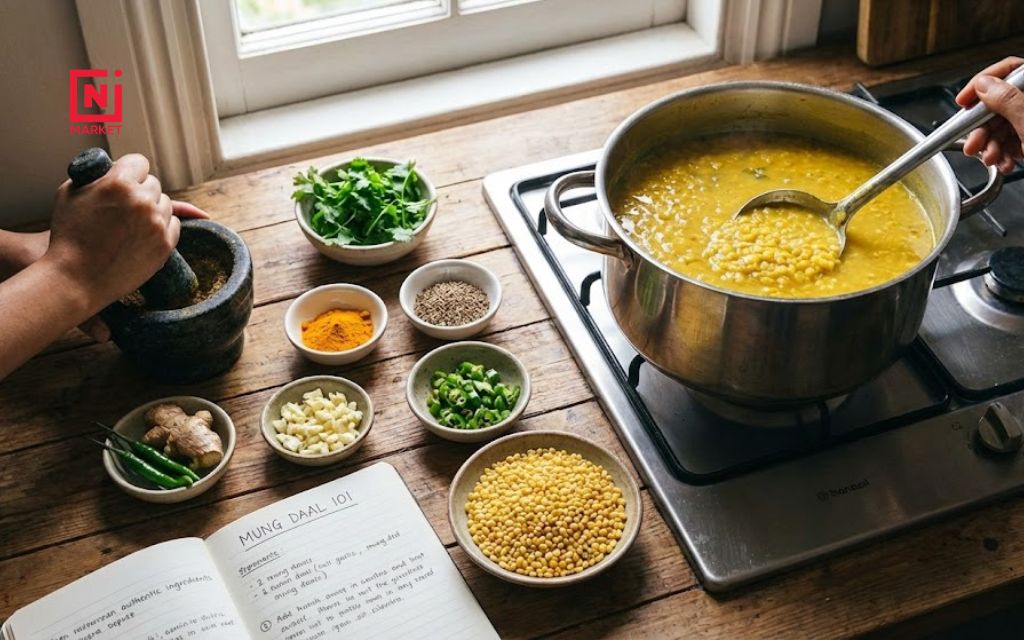
Indian soup recipes are a wide family of brothy and hearty dishes made from lentils, vegetables, chicken, or grains, all layered with aromatic spices. Common seasonings include cumin, turmeric, ginger, garlic, garam masala, and fresh cilantro. Depending on the recipe, the texture can range from light and sippable to thick and stew-like.
Most recipes follow a two-step method:
- Simmer lentils or vegetables in water or stock until soft.
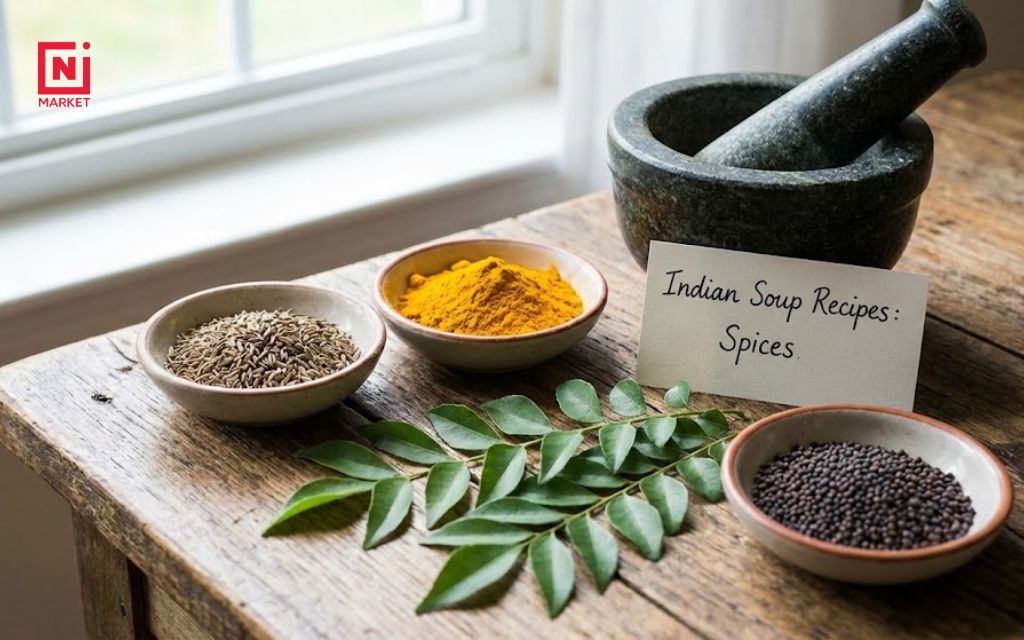
- Finish with a tempering of hot oil or ghee bloomed with whole spices such as mustard seeds, cumin seeds, curry leaves, and dried chili.
This technique, called tadka or chhonk, gives Indian soups their signature aroma and makes them taste far more complex than the ingredient list suggests.
Cultural background and why it’s special
Across India’s regions, soup-style dishes appear in daily home cooking, temple meals, and festive spreads. Here’s a quick look at the most well-known types and where they come from:
| Soup | Region | Key Characteristic |
| Rasam / Tomato Rasam | South India | Thin, peppery, tangy broth; often used as a home remedy |
| Sambar | South India | Lentil and vegetable stew; a staple of temple and festival meals |
| Dal soup (moong/masoor) | North & South India | Creamy lentil base; everyday comfort food |
| Mulligatawny | Anglo-Indian | Colonial-era adaptation of South Indian pepper broth with lentils, apples, and cream |
| Ragi soup | South India | Made with finger millet; high in fiber and iron |
| Yakhni | Kashmir | Yogurt-based aromatic broth; delicate and warming |
Rasam and turmeric-rich dal soups are also valued as home remedies for colds and digestive discomfort, thanks to their warming spice profile and light, easy-to-digest texture. Heartier versions like mulligatawny and Indian winter soups with squash, barley, and root vegetables are especially popular in cooler months.
Easy Indian soup recipes to try at home
1. Simple Indian dal soup (lentil soup)
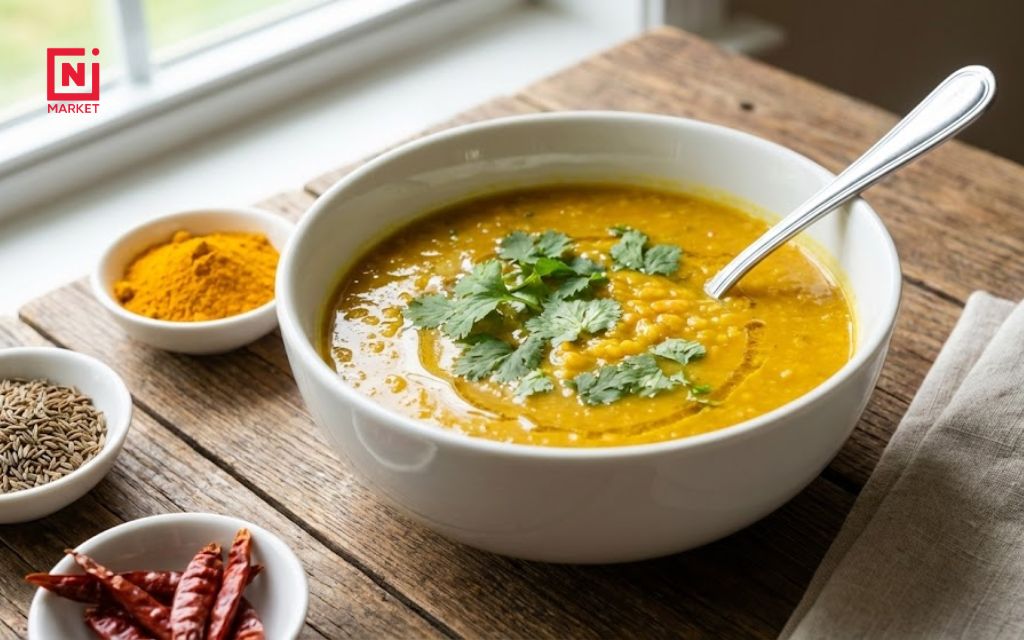
Dal soup is one of the easiest Indian soup recipes for beginners. Yellow moong dal or orange masoor dal works best for a quick weeknight dinner.
How to make it:
- Rinse 1 cup of moong dal or masoor dal until the water runs clear.
- Combine the dal with diced onion, tomato, garlic, turmeric, and salt in a pot with 4 cups of water.
- Simmer on medium heat for 20–25 minutes until the lentils are soft and the soup thickens slightly.
- In a small pan, heat ghee or oil and bloom cumin seeds, mustard seeds, and a dried red chili for about 30 seconds.
- Pour the hot tempering directly over the dal and stir it in.
- Finish with fresh cilantro and a squeeze of lemon juice. Serve over basmati rice or with flatbread.
Tip: For the creamiest texture, use a whisk or the back of a spoon to break down the lentils slightly before adding the tempering.
Find this ingredient and more at Ni Market today — moong dal, masoor dal, turmeric, cumin seeds, mustard seeds, and basmati rice are all stocked on our shelves.
2. Tomato rasam (peppery South Indian broth)
Tomato rasam is a bright, tangy broth made from tomatoes, tamarind, black pepper, and garlic. It’s light enough to sip on its own and flavorful enough to ladle over hot rice.
How to make it:
- Mash 2–3 ripe tomatoes together with 1 tablespoon of tamarind paste, 2 crushed garlic cloves, and green chili to taste.
- Boil that mixture in 3 cups of water with black peppercorns, cumin powder, turmeric, and salt for 10 minutes.
- Temper mustard seeds, curry leaves, and a pinch of hing (asafoetida) in hot oil and stir it into the broth.
- Serve hot, garnished with fresh cilantro.
Tip: Keep tamarind paste on hand rather than whole tamarind pods for faster prep. Curry leaves are a must here – they add a floral, citrusy aroma that dried herbs cannot replicate.
Shop tamarind paste, curry leaves, whole peppercorns, and hing at Ni Market in Denver.
3. Indian vegetable clear soup
This Indian vegetable soup is a lighter option that still delivers plenty of flavor. It works well as a starter or a simple lunch.
Key ingredients and tips:
| Ingredient | Tip |
| Carrots, cabbage, green beans, corn | Cut uniformly for even cooking |
| Fresh garlic and ginger | Mince finely for a cleaner broth |
| Vegetable stock | Use a low-sodium stock to control salt |
| Soy sauce (light) | Add just a teaspoon for umami depth |
| Black pepper and chili flakes | Adjust to your heat preference |
Simmer your vegetables in the stock for 8–10 minutes until just tender. Finish with pepper, a dash of soy sauce, and fresh spring onions. For a slightly thicker texture, stir in a small amount of cornstarch dissolved in cold water.
Visit Ni Market in Denver for the freshest vegetables, quality stock, and other Asian ingredients.
4. Creamy mulligatawny soup
Mulligatawny is one of the most well-known Indian soup recipes outside of India. It blends red lentils, rice, aromatic vegetables, curry powder, and coconut milk into a rich, golden soup with a mild, slightly sweet flavor profile.
How to make it:
- Sauté diced onion, celery, carrot, and garlic in oil until softened.
- Add red split lentils, curry powder, turmeric, and chicken or vegetable stock. Simmer for 20 minutes.
- Stir in cooked basmati rice and coconut milk. Simmer for another 5 minutes.
- Blend half the soup for a creamy texture while keeping some chunks for body.
- Season with salt, pepper, and a squeeze of lemon. Top with fresh cilantro or a drizzle of coconut milk.
Variation: For chicken mulligatawny, add shredded poached chicken along with the rice for a heartier meal.
Tip: A small diced apple added with the vegetables gives mulligatawny its classic gentle sweetness – a nod to its Anglo-Indian colonial origins.
Discover authentic flavors only at Ni Market, Denver – red split lentils, coconut milk, basmati rice, and curry powder are all available in-store and online.
Quick-reference: Indian soup ingredients at a glance
| Ingredient | Role in the dish | Available at Ni Market |
| Moong dal / masoor dal | Creamy base for lentil soups | Yes |
| Toor dal | Sambar and dal soups | Yes |
| Basmati rice | Added body; served alongside | Yes |
| Ghee | Fat base for tempering | Yes |
| Coconut milk | Creaminess in mulligatawny | Yes |
| Curry leaves | Aroma in South Indian soups | Yes |
| Mustard seeds | Tempering; nutty flavor | Yes |
| Cumin seeds | Tempering and spice base | Yes |
| Turmeric | Color, warmth, anti-inflammatory | Yes |
| Tamarind paste | Tang in rasam | Yes |
| Garam masala | Finishing spice blend | Yes |
| Fresh cilantro | Garnish | Yes |
| Green chilies | Heat | Yes |
Choosing, storing, and using Indian soup ingredients
- Choosing lentils: Look for lentils with a uniform color and no visible moisture or discoloration. Red masoor dal cooks in 15–20 minutes and is ideal for quick soups. Yellow moong dal is even lighter and easier to digest, making it a good starting point for easy Indian soup recipes.
- Storing whole spices: Keep cumin seeds, mustard seeds, and whole peppercorns in airtight containers away from heat and light. Whole spices retain their potency far longer than ground versions, and grinding them fresh just before cooking makes a noticeable difference in flavor.
- Blooming spices correctly: When you add whole spices to hot oil or ghee, you should hear a sizzle almost immediately. Mustard seeds are ready when they start to pop. Curry leaves will crackle and release their aroma. This process takes only 30–60 seconds, so stay close to the pan.
- Using fresh vs. dried herbs: Fresh cilantro should be added at the end of cooking. Dried curry leaves are a reasonable substitute but deliver less fragrance than fresh. Whenever possible, choose fresh curry leaves – you’ll find them consistently stocked at Ni Market.
Where to buy authentic Indian soup ingredients in Denver
At Ni Market, Denver’s largest Asian grocery store with over 25 years of serving the local community, you’ll find everything you need for authentic Indian soup recipes in one trip. From bags of moong dal, masoor dal, and toor dal to fresh curry leaves, whole spices, tamarind paste, coconut milk, and basmati rice, our shelves are curated for home cooks who want real flavor without guesswork.
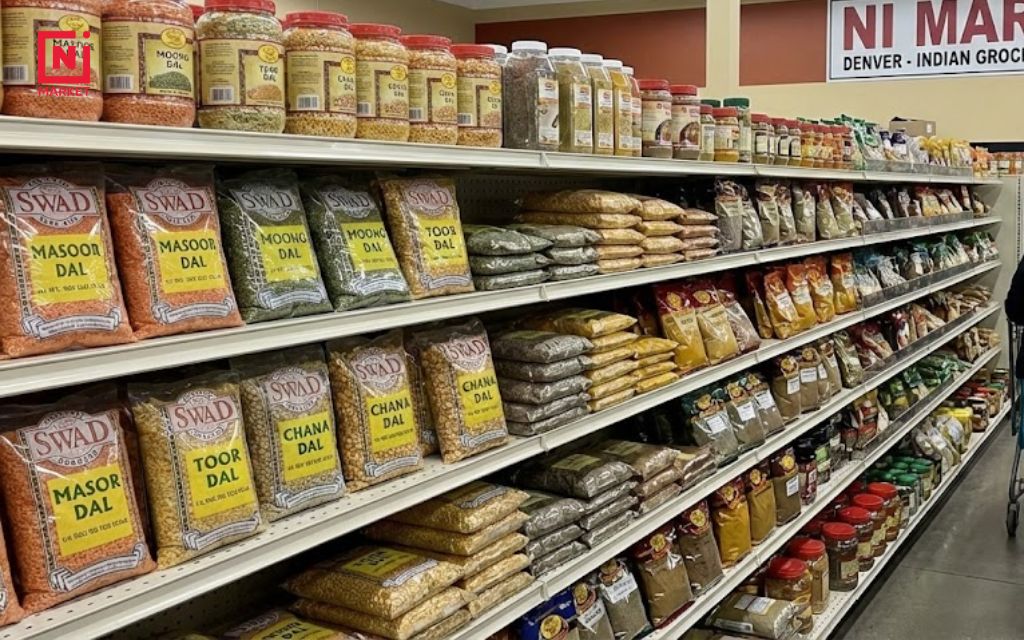
You can also pair those pantry staples with fresh produce – onions, garlic, ginger, tomatoes, spinach, and seasonal vegetables – all sourced with quality in mind.
Shop wholesale or retail – fresh quality you can taste.
Explore our full inventory in person or order online at ni.market. For more cooking inspiration, browse our recipe blog for tips and ideas tailored to Denver home cooks.
FAQs about Indian soup recipes
1. What can I substitute for lentils in Indian soup recipes?
Split peas, small white beans, or barley all work as substitutes with a similar hearty texture. For lighter soups like rasam, you can skip lentils entirely and rely on tomato, tamarind, and spices for body. Ni Market stocks a wide variety of legumes so you’ll always have options.
2. Are Indian lentil soups healthy or gluten-free?
Most dal-based Indian soup recipes are naturally gluten-free, high in plant-based protein, and rich in fiber. They’re also typically made with heart-friendly fats and plenty of vegetables, making them a smart option for balanced meals. Always check that your stock and soy sauce are labeled gluten-free if needed.
3. Where can I buy fresh ingredients for Indian soup in Colorado?
In the Denver area, Ni Market is your best one-stop source for lentils, basmati rice, coconut milk, fresh curry leaves, and a full range of Indian spices — plus fresh produce like onions, garlic, ginger, and tomatoes. Visit our store or shop online at ni.market.
4. How do I store lentils and spices for Indian soup?
Store dry lentils in an airtight container in a cool, dark place. They keep well for several months and cook more evenly when kept away from moisture. Whole spices like cumin and mustard seeds last longest stored away from heat and light. Grind them fresh for maximum flavor.
5. What dishes pair well with Indian soup recipes?
Indian soups pair well with steamed basmati rice, naan, roti, or crusty bread. For heartier dinners, serve dal soup or mulligatawny alongside grilled meats, roasted vegetables, or a small plate of pickles and yogurt. A simple green salad also rounds out a lighter soup meal nicely.
Conclusion
Indian soup recipes are an approachable, comforting way to bring the flavors of Indian home cooking into your kitchen – especially when you start with quality lentils, fresh aromatics, and the right spices. From a quick moong dal soup on a weeknight to a slow-simmered mulligatawny on the weekend, these recipes reward even beginner cooks with rich, satisfying results.
Ni Market is your go-to destination for fresh, high-quality Asian groceries in Denver. Visit our store or explore more recipes and cooking inspiration in Denvẻ right here.